Caravan or Campervan: How They Differ and Which Suits You
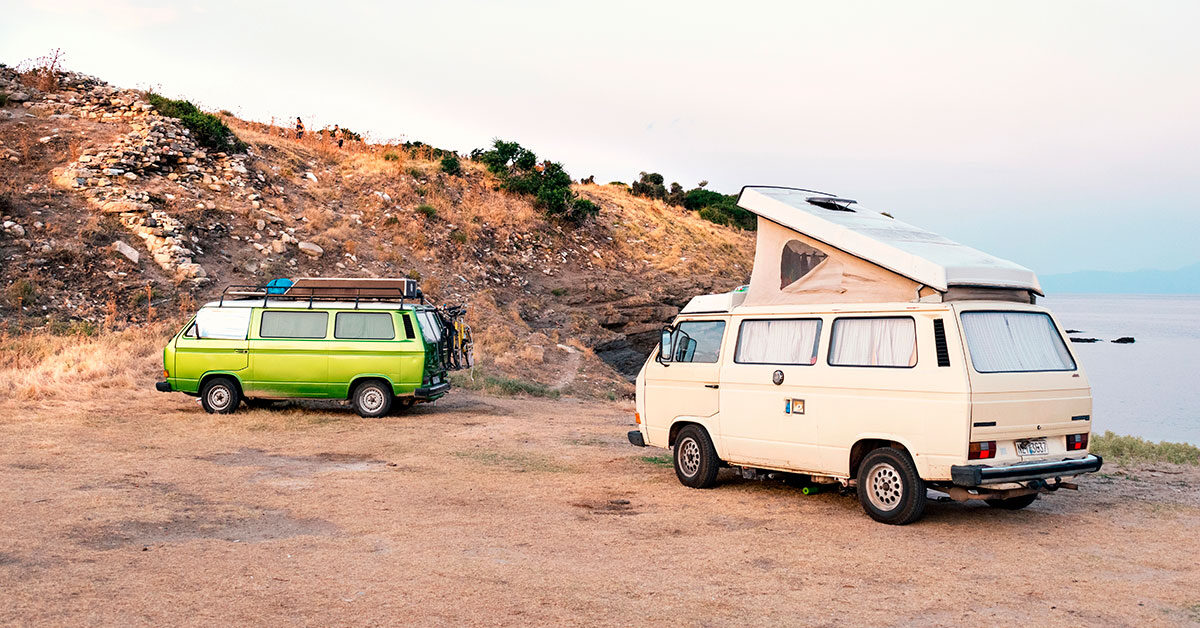
There is one question that comes up at every caravan and motorhome show, in every travellers' group and over every long lunch on a campsite: should I buy a caravan or take the plunge with a campervan? Both promise the same thing —travelling with your home in tow— but by completely different routes. One is an unpowered trailer you hitch to your car; the other is a van converted into living quarters that you drive yourself. And that basic difference changes everything: the price, the licence, the paperwork, where you can sleep and even where you park it when you are not travelling. Before you reach for your wallet, let's go through the real differences, without the brochure gloss.
What a campervan is and what a caravan is
What exactly is a campervan?
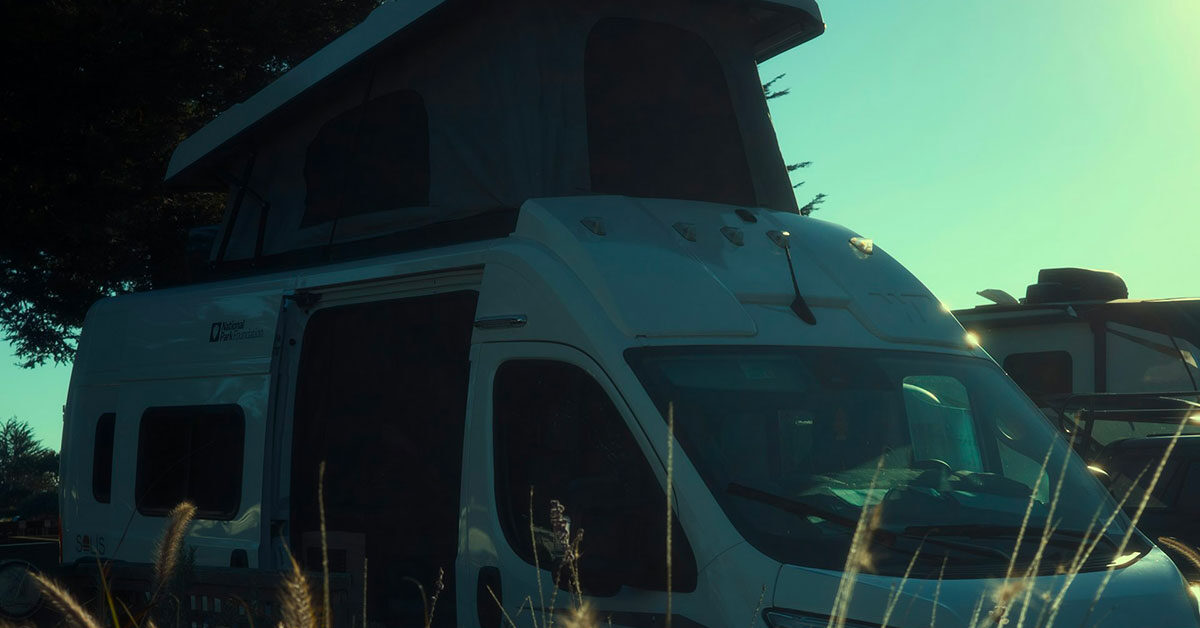
A campervan is a commercial van —a Volkswagen Transporter, a Ford Transit, a Fiat Ducato— converted inside so you can live in it. It gets a bed, a small kitchen, storage, an electrical system with a leisure battery and, in the better-equipped ones, running water, a diesel night heater and even a chemical toilet hidden under a seat. From the outside it still looks like a van; inside it is a miniature flat.
The key word here is "converted". A campervan is not born a home: it becomes one, whether at the factory, in a specialist conversion workshop or in the garage of a patient DIY enthusiast. And that conversion, as we will see later, comes with paperwork. What it always keeps is its engine and its character as a self-contained vehicle: you get in, start up and go, without depending on anything else.
The caravan: a living space on wheels, with no engine
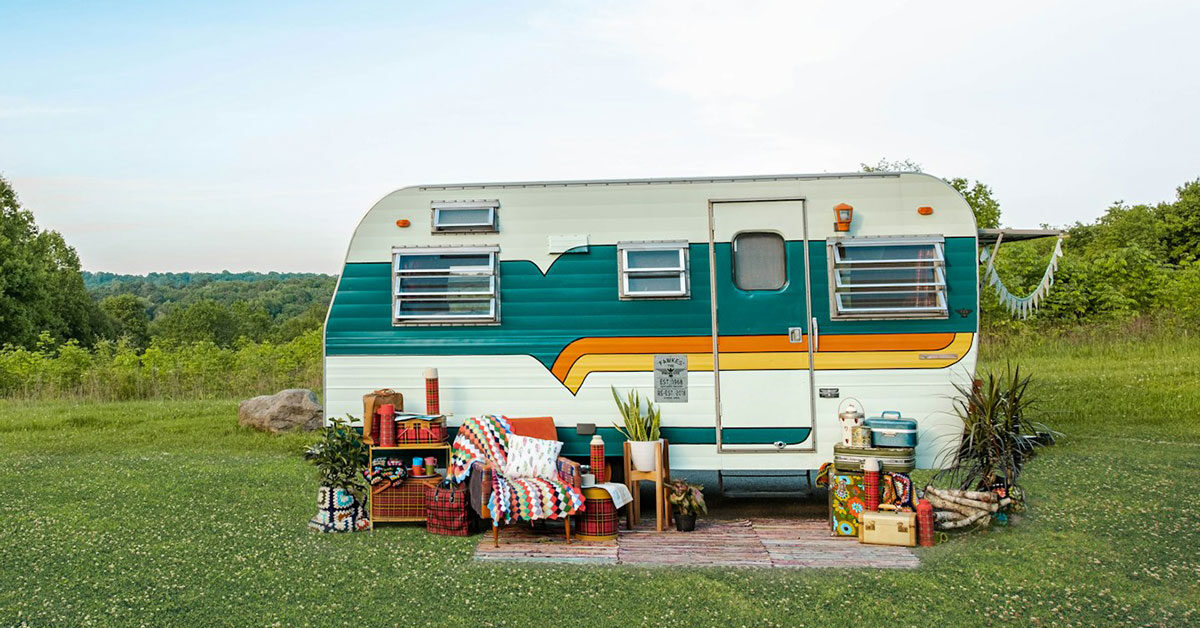
The caravan plays in the opposite league. It has no engine and no steering wheel: it is a trailer you can live in that hitches to your car's tow ball and goes nowhere on its own. In return, because its whole body is given over to living space, it fits a real home inside: a separate bedroom, a lounge with a fixed table, a full kitchen and a bathroom with a shower, even in models that are far from the biggest.
The way you use it is different too. You arrive at the campsite, level it, hook it up to electricity and water, unhitch it and keep your car free to get around. The caravan stays put as your home while your car remains your car. That double act —a fixed home and a free car— is its great selling point, and at the same time its burden: you will always need a car capable of towing it and somewhere to leave it for the rest of the year.
Campervan, caravan and motorhome: don't mix them up
It is worth clearing up the vocabulary, because in conversation everything gets mixed together. "Camper" is the umbrella term for motor vehicles fitted out for sleeping, and the campervan is its most popular version. The motorhome is something else: a vehicle built at the factory as living quarters, on a van or light-truck chassis, with a full habitation area and the volume of a house on wheels. More comfort than a campervan, yes, but also a lot more vehicle to move around.
The caravan, as we have seen, does not even belong to that family: it is a trailer. If you want to fine-tune the comparison between the two, you will find the details in our article on the differences between caravans and motorhomes. Here we stick to the head-to-head that most newcomers face today: caravan versus campervan.
Campervan vs caravan: the quick comparison
Driving and manoeuvring: one you drive, the other you tow
The most immediate difference is behind the wheel. A campervan drives like a large car: same licence, same feel, a little more height and length, and that's it. You park in a normal space, get into underground car parks if the height allows and slip through the old town of any village without breaking a sweat.
Towing a caravan is a different sport. Car plus caravan can exceed ten metres, roundabouts call for wide lines and reversing works the opposite way to what your instincts tell you: to make the trailer turn right, the steering wheel first goes left. It can be learnt, and thousands of caravanners master it every summer, but it takes practice and respect. Add crosswinds, the sway when a lorry overtakes you and the need to brake early, and you will understand why some people never take the plunge.
Living space and comforts on board
Here the caravan wins hands down. Its length has no engine or cab eating into the space: it is all living area. An average caravan offers a fixed double bed, bunks for the kids, a kitchen with several burners, a big fridge, a bathroom with a shower and enough headroom to walk upright from one end to the other. It is, quite literally, a flat on wheels.
The campervan plays Tetris. Every centimetre does double duty: the table folds away, the bed folds down over the seat, the cupboards hide where they won't get in the way. For a practical couple it is more than enough, and that is its minimalist charm. But let's be honest: cooking hunched over while it rains outside, showering in the campsite block because there is no shower on board, or getting dressed in turns because you can't both stand up at once is not for everyone. With children or for long stays, the caravan's space is something you appreciate every day.
The campervan as an everyday vehicle; the caravan, only for travelling
There is one advantage of the campervan that comparisons tend to overlook and that, in practice, carries a lot of weight: it can be your everyday car. Many owners use it to get to work, do the shopping or take the kids to school, and at the weekend the same van becomes their accommodation. One vehicle, one insurance policy, one set of servicing. For anyone who lives in a city and cannot afford two cars, that two-in-one justifies the investment on its own.
The caravan is the opposite: kit used purely for holidays. Eleven months a year it sits still, taking up space and waiting. That is not a bad thing in itself —your usual car stays your usual car, without hauling a house around every day— but it forces you to answer the awkward question: where do you put it when you are not travelling? Hold on to that thought, because we tackle it head-on at the end of the article.
Price and upkeep: what each option costs
The price of a campervan: new, second-hand or converting it yourself
On to the numbers, which is where it hurts. A new branded campervan, with its kitchen, pop-up roof and factory approval, currently costs between €45,000 and €70,000, and premium models go well beyond that without blinking. The second-hand market has rather more down-to-earth options, although campervans hold their value surprisingly well and bargains are snapped up fast.
The third route is to buy the van and convert it: having a specialist workshop do the conversion usually costs between €8,000 and €25,000 depending on the finish, on top of the price of the base vehicle. Doing it yourself cuts the labour bill, but be careful: it does not exempt you from the engineer's technical project or from getting the conversion approved at the ITV (Spain's MOT), and the materials are not free either. The entry price is more affordable than a dealer campervan, yes, but the small print of the paperwork is real and we will cover it in its own section.
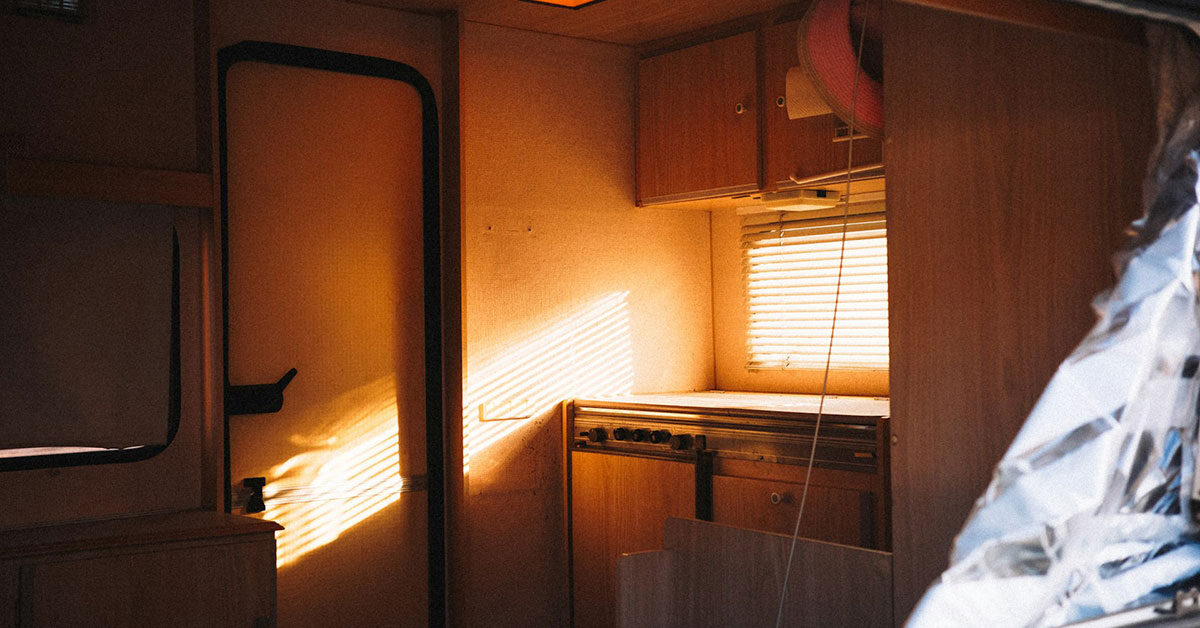
What a caravan and the towing kit cost
The caravan starts with a clear advantage on purchase price. A new mid-range model, with berths for four or five people, costs between €15,000 and €30,000, half or less than an equivalent campervan. Second-hand, with patience, you can find decent units for considerably less. Per square metre of living space, nothing in the caravanning world can compete with it.
But you have to add the towing kit to the budget, and it is not a token amount: an approved, professionally fitted tow bar (a few hundred euros), extension mirrors, perhaps a stabiliser, and above all a car with enough towing capacity. If your current small car cannot handle the weight, the sums change completely. Even so, for anyone who already has a capable car, the caravan remains the cheapest way into travelling with your own home.
Upkeep, insurance and ITV: the costs you don't see when you buy
The purchase price is the snapshot; the upkeep is the film. A campervan carries everything a motor vehicle carries: oil, brakes, clutch, tyres, breakdowns and motor caravan insurance that rises with the value of the conversion. A caravan, with no engine, escapes almost all the mechanics: its upkeep comes down to wheels, overrun brake, seals and keeping an eye on damp, its silent enemy. Its insurance costs little a year, too, although remember that you will also be dealing with the insurance on the car that tows it.
There is one more cost that hardly anyone puts in the spreadsheet and that arrives punctually every month: the space where the vehicle sleeps. Whether it is a campervan or a caravan, if it does not fit in your garage you will need somewhere secure, and it pays to know how much it costs to store your caravan or campervan before you sign the purchase, not after. It is a modest amount compared with the vehicle itself, but it is recurring, and planning for it avoids surprises in the family budget.
Campervan approval and licences: the paperwork for each
Getting a campervan conversion approved: what the ITV requires
This is where most people slip up. Converting a van into living quarters is, in the eyes of the law, a major modification, and as such it has to be legalised. The process involves a technical project signed by an engineer, a certificate from the workshop that carries out the work, certificates for the materials and installations —the gas one is especially demanding— and a specific inspection at the ITV which, if everything checks out, changes the vehicle's registration documents to a motor caravan.
And if you skip it? Then that bed and that furniture do not legally exist: the routine ITV can fail the vehicle, the Guardia Civil can fine you for an unapproved modification and, most seriously, your insurer can refuse to cover a claim on the grounds that the vehicle is not what it claims to be. The caravan, on the other hand, avoids all of this: it leaves the factory already approved as what it is. On original paperwork, a point to the trailer.
Which licence you need to tow a caravan: B, B96 or B+E
For the campervan the answer is short: as long as it does not exceed 3,500 kg maximum mass —and the vast majority do not— your ordinary carnet B (the standard Spanish/EU category B car licence) is all you need. For the caravan it is more involved and depends on the weights. With a B licence you can tow up to 750 kg with no further calculations, and heavier caravans too, provided the MAM (maximum authorised mass) of car plus trailer combined does not exceed 3,500 kg.
If the combination goes over that, the licence extensions come into play: B96, obtained with a practical test and allowing combinations of up to 4,250 kg, and B+E, the next step up for heavier trailers. It is no big deal —the tests are affordable and there is no extra theory exam— but it is one more formality and cost that a campervan does not ask of you. Before you fall for a particular caravan, add up the weights with your actual car: more than one buyer has found out too late that their driving licence did not cover it.
Speed, ITV and other rules that differ between them
Being on the road is different too. A campervan up to 3,500 kg follows the limits for a car: 120 km/h on motorways and dual carriageways. Towing a caravan, the limit drops to 90 km/h on motorways and 80 on ordinary roads, and in practice a comfortable cruising speed is lower still. On a long trip, that difference shows up in hours at the wheel.
The ITV is a similar story: the campervan follows the schedule of a light vehicle (first inspection at four years, then every two, and annually from ten years old), while a caravan over 750 kg MAM has its own inspection every two years, with the first at six. Managing two inspections, one for the car and one for the trailer, is a small extra hassle for the caravan camp. On the other hand, remember that its "mechanics" are minimal and its inspection is usually a quick formality.
Overnight stays and travelling: the freedom each one gives you
Staying overnight in a campervan: what the rules say
This is where the campervan shows off, and rightly so. Spanish regulations distinguish between staying overnight and camping: sleeping inside a properly parked vehicle, without putting out awnings, tables or levelling chocks, without taking up more room than the parking space and without discharging anything outside, counts as staying overnight, and in principle it is legal wherever parking is allowed, unless an ordenanza municipal (local bylaw) says otherwise. As soon as you set up camp, it becomes camping, and that is only allowed on campsites and authorised areas.
Because a campervan is discreet and does not need to unfold anything, it fits that legal definition like a glove: you park, draw the curtains and go to sleep. With a car-and-caravan combination, an impromptu overnight stop is almost theoretical: finding room for ten metres of rig is hard enough, and a parked caravan with its legs wound down rarely passes for a "parked vehicle" in the eyes of strict local officers. The caravan is designed for something else, and there is no shame in admitting it.
Travelling with a caravan: campsites and long stays
That something else is the fixed-base holiday, and that is where the caravan is in its element. You arrive at the campsite, set it up once —level it, hook up, put out the awning— and from then on you have a complete home and a free car to explore the area, go shopping or head down to the beach without packing anything away. Families who spend whole fortnights on Mediterranean campsites are in no doubt about it, and with good reason.
On long stays, moreover, the caravan earns its keep: real bedrooms, a big fridge, room for it to rain all day without anyone climbing the walls. Many campsites offer seasonal rates or annual pitches where the caravan stays set up for months, something unthinkable with a campervan, which after all is your vehicle. If your holiday plan looks more like "putting down roots for a fortnight" than "life on the open road", you already know which way the scales tip.
Touring or a fixed base? Depending on how you travel, one or the other wins
In the end, the choice comes down to one honest question: how do you really travel? If touring is your thing —somewhere different every night, deciding as you go, squeezing through small villages and mountain roads— the campervan wins without argument: it is nimble, discreet, sleeps where it parks and no manoeuvre scares it. It is pure freedom in van form.
If your typical trip is settling into a good campsite and taking in the area at a gentle pace, the caravan gives you more home for less money and a free car for day-to-day outings. Neither answer is better than the other: there are touring travellers and base-camp travellers, and each profile has its natural vehicle. The expensive mistake is buying the vehicle for the profile you are not, out of fashion or on impulse. Be honest with yourself before you are honest with the seller.
Where to store your caravan or campervan when you are not travelling
The problem with parking it on the street or in your garage at home
Whatever you choose, there is a reality that hits in the first winter: the vehicle spends far more days parked than travelling. Leaving it on the street seems free, but it costs you dearly. The sun cracks rubber and seals, the rain finds every gap, vandalism and theft of equipment are commonplace, and in many cities a caravan parked on the public road for weeks ends up collecting fines. A campervan, too, loses its appeal as a discreet vehicle when it has spent a month gathering dust on the same corner.
And your garage at home? Campervans with a pop-up roof are rarely under two metres high, and many shared residential garages will not take them, because of the height clearance or the residents' association rules. A caravan simply won't fit, and parking it on the plot of your villa —if you have one— ends up causing friction with the neighbours and with local bylaws. The result is that thousands of owners spend the year playing Tetris with their holiday vehicle.
A secure storage facility: the option that extends the vehicle's life
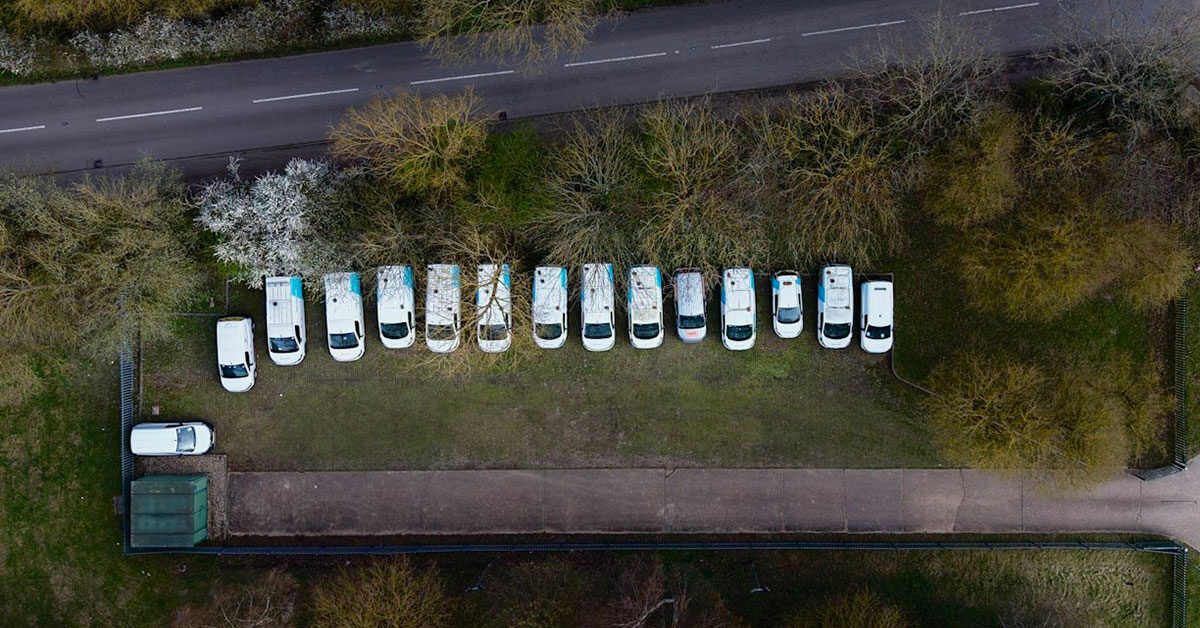
The solution much of the sector has adopted is a space in secure storage for caravans and campervans in Valencia: a closed compound, with access control, cameras and surveillance, designed precisely for this kind of vehicle. For a reasonable monthly fee, your caravan or campervan is stored safe from vandalism, theft and fines, and you get your garage space or your stretch of street back.
There is a less obvious but equally real benefit: the lifespan of the vehicle. A leisure vehicle that spends its idle months in a well-kept compound, where you can easily start it up and check it over before each trip, arrives at every season in better condition than one that sits out in the urban elements. For a caravan, which relies on its seals and watertightness, the difference shows in years; for a campervan, in headaches that never happen.
So, caravan or campervan?
Let's sum up without beating about the bush. Choose a campervan if you travel as a couple or alone, you like touring, you want a vehicle that also works for everyday use and you don't mind paying more for that versatility, accepting the approval paperwork if the conversion is not factory-built. Choose a caravan if there are several of you, your plan is long stays on campsites, you already have a car that can tow and you want to maximise living space per euro, in exchange for learning to tow and checking which licence the combination requires.
And whatever you decide, answer before you buy the question almost everyone leaves until last: where will the vehicle sleep during the months it is not travelling? Having the space sorted saves you the disappointment of taking delivery of a new caravan or campervan and discovering you have nowhere to put it. If you are in or around Valencia, you can check prices and available spaces in a minute and then buy with all your homework done. Safe travels, whether with an engine or a tow bar.