Where Can You Park a Caravan in Spain? What the Law Says About Motorhome Parking and Overnight Stays
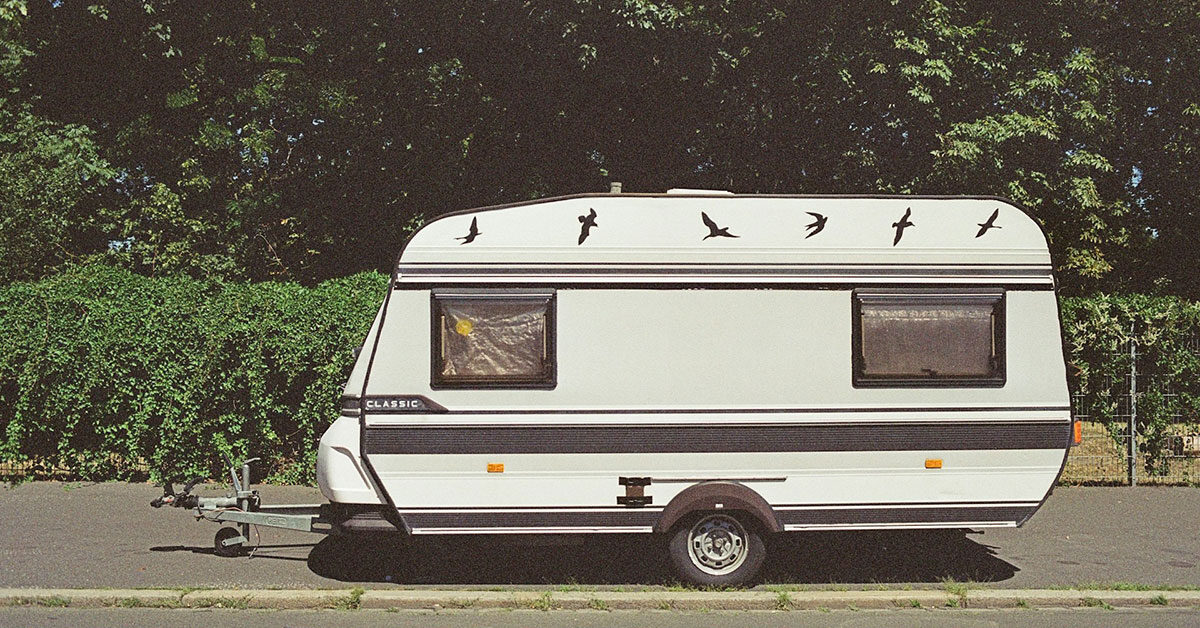
Anyone who owns a caravan or a motorhome ends up asking the same question sooner or later: can I leave it on the street, outside my house, and forget about it? The answer has two layers. On top, national traffic regulations, the same in Silla as in Burgos. Underneath, each town hall's ordenanza municipal (local bylaw), which decides how long the vehicle can stay in the same place and whether you can sleep inside. We go through both, with a stop in Palma, one of the municipalities that has tightened the screws the most.
Can you legally park a caravan on the street?
Generally, yes. A properly parked vehicle commits no offence simply because it is a motorhome. The catch lies in what you do once it is parked. Leaving it there is one thing; spending the night inside or setting up a little camp around it is quite another, and that is where the restrictions get a lot tougher.
What does the DGT say about parking caravans and motorhomes on public roads?
The DGT (Spain's Directorate-General for Traffic) sets the basic rules through the Reglamento General de Circulación (General Traffic Regulations), and in that text a motorhome parks just like any car. The conditions are the usual ones: don't obstruct traffic, don't block a pedestrian crossing, don't double-park or take up a space reserved for loading or for people with reduced mobility. That's all. The traffic authority does not expressly prohibit a motorhome from spending the day on the street and leaves the finer details to town halls, above all overnight stays and anything put out around the vehicle.
The legal difference between parking and staying overnight in a caravan
In law they are different concepts. Parking means leaving the vehicle stationary in a permitted place, with no one living in it. Staying overnight means sleeping in it and using it as accommodation, even for a single night. Why does it matter? Because parking is usually governed by the same conditions as for a car, while overnight stays depend on specific bylaws that ban or limit them in certain parts of the municipality. The first areas to be closed off are almost always the tourist hotspots and the busiest districts.
What kind of vehicle counts as a caravan or a motorhome under the rules?
The rules separate two families. A caravan is an unpowered trailer hitched to a towing vehicle; if it exceeds 750 kg MAM (maximum authorised mass) it carries its own registration plate and has its own ITV (Spain's MOT). A motorhome, like a campervan, moves under its own power and carries living equipment inside, with at least a bed and a kitchen. Some bylaws treat each type differently and tend to be more tolerant of the motorhome than of the towed caravan, which takes up more street space and is harder to manoeuvre. Left on its own, without a car in front, it fares even worse: quite a few bylaws do not allow unhitched trailers on the road. Here we explain the differences between a caravan and a motorhome in detail.
How long can a caravan stay parked on the street?
There is no national figure. Each bylaw sets its own limit, although if you compare a few, recurring patterns emerge.
Time limits under local bylaws
The norm is a cap of between 24 and 72 hours of continuous parking in the same spot. After that, the town hall considers the vehicle to be misusing the road and issues a fine. No resident wants their street to become a permanent garage for seven-metre vehicles that take up as much room as two small cars. Parking spaces have to rotate.
What happens if you exceed the permitted parking time?
First, the registered keeper gets a fine. In extreme cases the town hall orders the vehicle to be removed by the municipal tow truck, and then the towing charge and the days in the pound are added to the penalty, which with a vehicle this size don't come cheap. The amount goes up for repeat offences and when there is evidence that the vehicle has not moved an inch for days. For the local police, that is no longer parking. It is using the street as a private space.
Our view, fines aside: a caravan left standing in the sun on the street for months deteriorates. The tyres become deformed from always resting on the same spot and the window seals dry out.
Tips for parking without being fined for overstaying
Before leaving the caravan somewhere for several days, read the bylaw; it is usually on the town hall's website and takes ten minutes. If you are staying in the area, move the vehicle every so often, and when the trip allows, look for a motorhome stopover area (aire), where the rules are more flexible. For leaving it for months between trips, the street is not the place. That is what our caravan storage in Valencia in Silla is for: a closed, fenced compound with 24-hour access and spaces from €40 a month on an annual contract.
What do the new bylaws say about overnight stays in caravans and motorhomes?
Many town halls have rewritten their bylaws in recent years to regulate overnight stays in more detail. They are after a tricky balance: attracting touring visitors, who spend money in the town, without the seafront waking up packed with vehicles in August.
Areas where you are allowed to stay overnight within the municipality
The trend is to mark out specific areas for sleeping. They usually coincide with service areas or motorhome stopover areas (aires) set up for the purpose, almost always away from the town centre and from the tourist spots where a night's stay ends in complaints from residents.
The difference between staying overnight and camping under the bylaws
This is the distinction that carries the most weight in any bylaw. Staying overnight means spending the night inside the vehicle without putting anything outside. Camping involves setting something up, whether that is opening the awning or putting a table and chairs by the door. Camping on public roads is banned practically everywhere; staying overnight, by contrast, is allowed with conditions in quite a few municipalities.
Penalties for unauthorised overnight stays on public roads
Sleeping outside the designated areas, or inside them but ignoring the conditions, costs you, and not in token amounts. The fine depends on the municipality and how serious the offence is.
Where can I park a motorhome in Palma?
Palma receives so much tourist traffic that its town hall has drawn up its own rules for motorhomes within the municipality. It is a good example of how far a city will go when it gets serious.
Designated areas on Palma's streets for parking motorhomes
There are areas intended for them, usually at the entrances to the city or on industrial estates. There, daytime parking is allowed, with restricted hours.
Specific restrictions on parking caravans in Palma
The historic centre and the areas of greatest tourist value are another story. The bylaw expressly bans both long-term parking and overnight stays, on two underlying grounds: the look of those streets and the lack of space. In a narrow street in the old town, a vehicle 2.30 metres wide cannot fit without getting in the way.
Fines and checks by Palma town hall on caravans and motorhomes
Checks are frequent, and much more so in high season. Fines easily exceed several hundred euros for staying overnight without authorisation or for overstaying the permitted time. With the awning out, the officer has even fewer doubts.
What can't you put out when parking a caravan on the street?
This is where bylaws get especially strict. What comes out of the vehicle is what gives away camping.
Rules on putting out awnings and outdoor furniture
Opening the awning or putting out tables and chairs is usually prohibited when the vehicle is parked on the street. For the bylaw, that is camping, not parking. In many municipalities it makes no difference if it is just twenty minutes for lunch.
Ban on discharging waste water and rubbish on public roads
Emptying grey water or black water (toilet waste) on the street, or dumping any kind of waste, is strictly forbidden. It is a serious offence and a public health problem for the whole neighbourhood. The grey water tank and the chemical toilet are emptied at a waste disposal point. At our compound in Silla, customers have one, along with other facility services such as the air compressor or the 220 V sockets.
The vehicle's footprint for anything placed outside
The general rule is that nothing should stick out beyond the vehicle's footprint while it is parked. Neither the awning nor the step may encroach on the pavement or the road beyond the vehicle's original dimensions. Depending on the municipality, even a top-hinged window opened outwards counts.
What fines do town halls impose for parking caravans incorrectly?
Each municipality has its own table of penalties, with notable differences even within the same province.
The most common offences under local bylaws
If you look at what gets fined most, the same four reasons always come up: overstaying the parking time, staying overnight without authorisation, putting things out around the vehicle and emptying waste water on the street. Almost all the tickets come from those.
How much the fines are for unauthorised camping or overnight stays
Between €100 and €1,500. That is the usual range for camping or staying overnight without permission, and what pushes the figure up is the seriousness of the case and whether the offender has previous offences. Few urban parking penalties go that high.
How to avoid fines: practical tips for parking caravans
Before you set off, find out about the bylaw in the municipality you are heading to and, whenever you can, sleep at a motorhome stopover area (aire). On the street, keep an eye on the clock and nothing outside the vehicle. And the months when the caravan isn't going anywhere? Then the most stress-free option is to keep it off the public road. You can check our storage prices, with month-by-month or full-year options, or ask us whether there is a space available on 637 300 602.