Campervan Storage: Why a Van Also Needs a Permanent Space
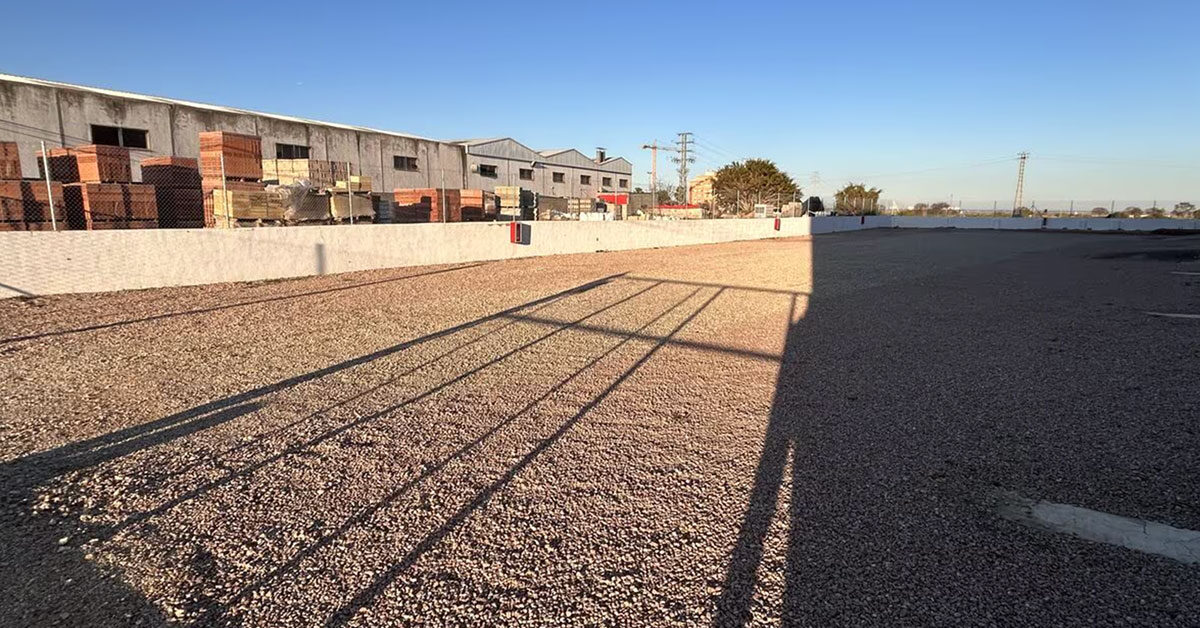
Anyone who buys a campervan thinks about routes: coves in the north of Spain, a long weekend in the Rincón de Ademuz, Asturias in September, maybe Portugal from end to end. Hardly anyone thinks about Tuesday afternoon, with the van back home and nowhere to leave it. A campervan is much bigger and heavier than a car and carries kit nobody wants to lose. Here we explain why a permanent space matters as much as choosing the right model (sometimes more) and what to look at before you sign up for one.
What is the difference between motorhomes and campervans when you are looking for parking?
Campervan vs motorhome: vehicle type and needs
They are mentioned in the same breath, but they are not the same. A campervan almost always starts life as a converted commercial vehicle; a low-profile or A-class (integrated) motorhome is built on a chassis designed for it and grows in length and height. A Ducato L3H2 is around 5.99 m long and 2.52 m high, while a mid-range A-class easily exceeds 7 m. With those figures, the garage in your block of flats (2.10 m headroom, if you are lucky) is ruled out for both. If you are still torn between formats, our blog explains the differences between a caravan and a converted van.
Why is the Fiat Ducato the most common base for campervan conversions?
Because it lasts. Spare parts are available at any garage in Europe and its almost square load area lets you make the most of every centimetre. Its success has a curious side effect: many private car parks and motorhome areas sized their spaces with this model's dimensions in mind, and those of its close cousins, the Citroën Jumper and the Peugeot Boxer.
Motorhomes and campervans: do they need the same space to park?
No. An over-cab or A-class motorhome often exceeds seven metres, and a campervan rarely goes over six. That difference forces anyone running a car park or a motorhome stopover area (aire) to separate zones and number each pitch according to the vehicle that fits in it. An extra metre seems like nothing until you have to reverse between two trailers.
Why have motorhome registrations risen so much in Spain?
How registrations have evolved in recent years
The curve has been climbing for a decade. Then came 2020. After the pandemic, many people saw a converted van as a way to travel without sharing a hotel corridor, and some dealers had waiting lists of several months.
Who chooses a motorhome or campervan today?
It is no longer just the retired couple spending the winter in the Algarve. Today campervans are bought by families with small children, people who work from home part of the week, surfers and climbers. That change of guard has sent demand soaring for places to leave the vehicle at a reasonable price, well away from the campsite with an annual pitch.
The effect of more motorhomes on parking
More vehicles, same streets. The number of caravans and motorhomes has grown far faster than the spaces available, and many town halls have had to rewrite their ordenanza municipal (local bylaw) to decide where people can stay overnight and what fine awaits anyone who leaves their campervan where they should not (we cover it in where you are allowed to park a caravan). Quite a few beach car parks along the Valencian coast now have two-metre height barriers.
Where can you legally park a campervan?
Parking on the street or using motorhome areas
Parking is not staying overnight. The DGT (Spain's Directorate-General for Traffic) put it in writing in its Instruction 08/V-74: a properly parked motorhome, with nothing sticking out beyond its outline, is parked like any car, even with people inside. The trouble starts when you put out the awning and the table or lower the stabiliser legs, because that already counts as camping.
What do the rules on tourist campsites say about parking?
The regional rules on tourist campsites set out what a campsite or an official motorhome stopover area must have: minimum services, safety conditions, fresh water and a point for emptying grey water. That is how they separate regulated camping from makeshift parking on a patch of waste ground.
The risks of parking without a proper permanent space
Fines. A wing mirror snapped off on a Saturday night. Paintwork cracked after two summers in the sun, and hunting for a spot in July, when half of Spain heads off in their van. Without a secure place, the bikes on the rear rack or the kit you left inside also go missing more easily.
Why is a permanent storage space better than a campsite or wild camping?
Campsite pitch or storage space: pros and cons
A campsite gives you water, electricity, grey water disposal and even Wi-Fi, and charges you by the night. A permanent space works the other way round: you pay a monthly or annual fee which, for anyone who travels now and then, works out much cheaper. At our storage facility in Silla it is €45 per month, VAT included, or €480 a year on an annual contract (the breakdown is in our storage prices). Compare that with what a coastal campsite charges for a single night in August.
Is wild camping legal with a motorhome or caravan?
In most of Spain's autonomous regions, no. The ban is stricter in protected natural areas and on beaches, where the Ley de Costas (Spain's Coastal Law) also comes into play. The law distinguishes between staying overnight and camping, and it is camping that carries the restrictions, for environmental and public order reasons.
The security and convenience of a permanent space for your campervan
If your van is safe from theft, with its maintenance up to date and loaded with the usual things (the chemical toilet, the folding chairs, the hose, the levelling chocks), there is no need to empty it after every trip. On Friday you turn up and off you go. At our compound in Silla you can get in at any time with a personal code from an app, and there is an air compressor to check your tyres before you set off; the rest is in the facility section.
How do you choose the best storage facility or motorhome area for your vehicle?
What services a pitch or motorhome area should have
Look at the basics first: fresh water, grey water and chemical toilet disposal, security, good lighting and a wide entrance that a seven-metre motorhome can get through without scraping. Ask about opening hours too. If it closes at eight, the return from every trip has to be planned against the clock.
Covered parking or a cover: how to protect your campervan
Covered parking gives better protection from the July sun and from hail, and the rooflight seals notice the difference over the years. A cover or tarpaulin is cheaper but falls short in a serious hailstorm. Is it worth paying for covered storage in Valencia? With our climate, we think that in most cases it is not: a well-oriented outdoor space (ours face north, on gravel) and a check of the seals every spring are enough for almost everyone.
Tourist campsites vs private motorhome storage
A campsite sells an experience. Swimming pool, communal areas, entertainment and sometimes a restaurant, all paid for, and on long stays the cost climbs steeply. A private caravan and motorhome storage facility does something else, something simpler: it keeps your vehicle in a secure space between trips. You do not sleep there (ours is not an overnight stopover area, best to know that from the start), nor do you wash the vehicle on site.
What should you bear in mind about parking before buying a motorhome or campervan?
Vehicle size and available parking spaces
Before you buy, measure. Then search. Many car parks do not accept tall or long vehicles, so it is worth calling several facilities nearby and asking whether they have a space for a campervan your size before you sign anything. If you live in the Valencia area, ask for a space at our facility before you complete the purchase.
The cost of a permanent space vs paying per night at a campsite
Do the maths. Add up what you would spend in a year leaving the van at a campsite whenever it is not on the road and compare it with the fee for a permanent space. For occasional use, the permanent space wins almost every time. Someone who practically lives on the road might come out better paying by the night.
Local rules on parking motorhomes and campervans in town
Every town has its own bylaw, with time limits and no-go zones, and what applies in Paterna does not necessarily apply in Gandia. It depends on the town hall, and there is no shortcut here: you have to read it before you buy. The most common questions about storage and access are covered in our frequently asked questions.