Static Caravan on a Campsite or a Storage Space: Which Works Out Better?
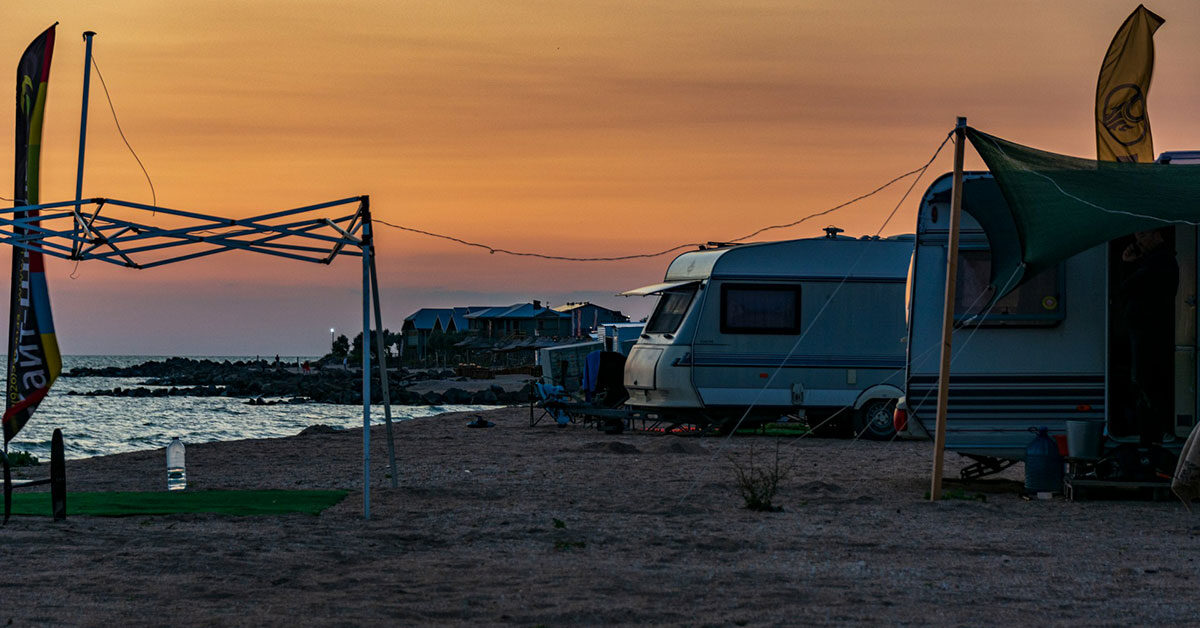
Leave your caravan permanently on a campsite or pay for a space at a dedicated storage facility? It is the question we are asked most by people calling us for the first time, and it is rarely settled with a calculator alone. Convenience matters and, above all, the way you travel.
Caravan or motorhome: which option suits the way you travel?
Before thinking about where to park, you need to be clear about which vehicle is worth it for you. Each one performs differently depending on how many times a year you go away and which routes you like.
The main differences between a caravan and a motorhome
A caravan is a trailer. It needs a towing vehicle with an approved tow bar, usually a car or a van. A motorhome combines engine and living space on a single chassis. You notice it as soon as you have to park: reversing a caravan into a tight space takes practice and a good gap, while a compact six-metre motorhome goes in almost like a large van. The technical detail is in our article on the differences between a caravan and a motorhome.
Caravan or motorhome for long trips?
On long trips many families stick with a caravan for a practical reason: they arrive at the campsite, unhitch and have the car free to go to the beach or do the shopping. A motorhome gives you more freedom to sleep somewhere different every night. For stringing together five or six stops in two weeks, it is unbeatable.
The advantages of a converted van over a traditional caravan
The campervan (the "furgo", as almost everyone in Spain calls it) has gained a huge amount of ground. It is barely bigger than a large car and fits in a normal parking space. On mountain roads, where towing a trailer means suffering at every bend, it handles with ease. More in our comparison of a caravan and a converted van.
A campsite with a seasonal pitch: the pros and cons of leaving your caravan set up
Many enthusiasts who go away regularly leave their caravan set up on a campsite for the whole season. They arrive on Friday and they are already on holiday.
What a campsite pitch for a caravan includes
The usual is an electric hook-up and a water point, and depending on its category the campsite adds drainage, Wi-Fi or a swimming pool. The big advantage is not having to move anything for a short break: awning up, chocks in place, corner steadies down and the fridge plugged in.
The cost of keeping a static caravan all year round
The problem is money. The annual or seasonal fee varies a lot depending on the area and what it includes (on the seafront, you can imagine). Add the vehicle's upkeep: the ITV (Spain's MOT) when it is due, the trailer's tyres and brakes, seals, gas. It is not cheap.
Is seasonal caravanning worth it compared with wild camping?
For people who go back to the same place year after year, yes. It saves towing on every trip, something an underpowered car will thank you for. Those who enjoy discovering new places will see a seasonal pitch as a tie, and they have a point.
Caravan storage: an alternative for keeping your caravan or motorhome
Between keeping it outside your front door (if there is room and the neighbours do not complain) and leaving it set up on a campsite, there is a middle ground that more and more owners are choosing.
How a caravan storage facility works
It is a compound for storing leisure vehicles while you are not using them. The spaces are sized so you can get in and out without stress. At ours, in Silla, an app with a personal code opens the automatic gate at any time, 365 days a year, and the ground is completely flat. Take a look at the facilities and services.
The price of storing a caravan vs a campsite
The difference is clear: you do not pay for a pitch with permanent electricity and water that a locked-up caravan does not need. We charge €45 per month on a month-by-month basis, or €480 a year on an annual contract (€40 a month), VAT included. If you would rather keep it under cover, a space in our indoor storage costs €100 per month. For short stays, €3/day with a minimum of seven days. The rest is on our prices page.
Security and convenience when parking at a caravan storage facility
What worries people most when they leave their vehicle untouched for months? Theft, by a long way. Ours is a closed, fenced compound with 24-hour CCTV and an alarm connected to the police. It has comprehensive insurance, and the policy is available to any customer who wants to see it.
Where should you park your motorhome if you travel often?
People who go away a lot have another question on the table: where to stop along the way.
Motorhome areas: the answer for overnight stays while travelling
Motorhome stopover areas (aires) have multiplied all over Spain. They offer somewhere to spend the night and a point where you can take on fresh water and empty your tanks. One clarification: a storage car park is something else, and you cannot stay overnight at ours.
Parking caravans in urban areas: what you need to know
In town things get more complicated. Many town halls restrict parking for long vehicles or ban leaving unhitched trailers on the street, and in Valencia city a gap big enough for a seven-metre caravan is almost a pipe dream. A fine costs more than a month's storage.
Rules on where to park motorhomes and campervans
Every town has its own ordenanza municipal (local bylaw), and there is no shortcut here: you have to check it before planning your route. What an inland village tolerates, the coastal town next door will fine you for.
Fixed campsite or freedom to roam: which kind of travel do you prefer?
It all depends on how you like to travel and how much free time you have.
Travelling by motorhome with no ties: pros and cons
Total freedom, that is beyond dispute. You decide in the morning where you will sleep. The price is planning, because at every stop you have to find somewhere to stay overnight and somewhere to empty your tanks. Some people have had enough by the third day.
A fixed campsite: convenience for those who want stability
For people who want to arrive and switch off, with the same facilities all season and the same pitch neighbours as always. Not a single last-minute search.
How to decide based on how often you get away
Our view: if you go away only occasionally, a storage space more than covers what you need. If you go to the same place almost every weekend, a seasonal pitch makes sense. What we recommend least is paying for a campsite all year round to use it for a month.
Caravans under 750 kg: do they change the way you park and travel?
Weight counts. It affects how you park and which licence you need.
The advantages of light caravans under 750 kg
A caravan with a MAM (maximum authorised mass) under 750 kg is small and can be hitched to almost any car. It is much easier to handle than a twin-axle model, and for beginners it is the logical way in. We explain which licence each weight requires in which licence you need for a motorhome or caravan.
Licence requirements for towing up to 750 kg
The carnet B (the standard Spanish/EU category B car licence) is enough. No need to take the B+E, and that opens the door to a great many drivers.
How easy it is to find parking with light models
A light model takes up less room and can be moved by hand over the last metre (with a good jockey wheel, one person can put it in place on their own).
Renting a motorhome: an option before you decide to buy
Before you spend what a motorhome costs, rent one. A trial week teaches you a lot.
When renting pays off compared with owning a caravan
If you travel once or twice a year, almost always. You can forget about insurance, the ITV, maintenance and finding a space to store it.
What to check before renting a motorhome or campervan
The general condition of the vehicle and that its ITV is valid. Read carefully what the included insurance covers, especially the excess, which is high with some companies.
Renting and storage: how to combine both options
Some people rent for the first few summers and then buy. If that day comes and you live in Valencia, we have spaces in Silla, less than 5 km from the V-31 and 600 metres from the Cercanías commuter train. Ask for a space or call us on 637 300 602.